
Language of the Day: Silver Lining

A hopeful English expression every student should know
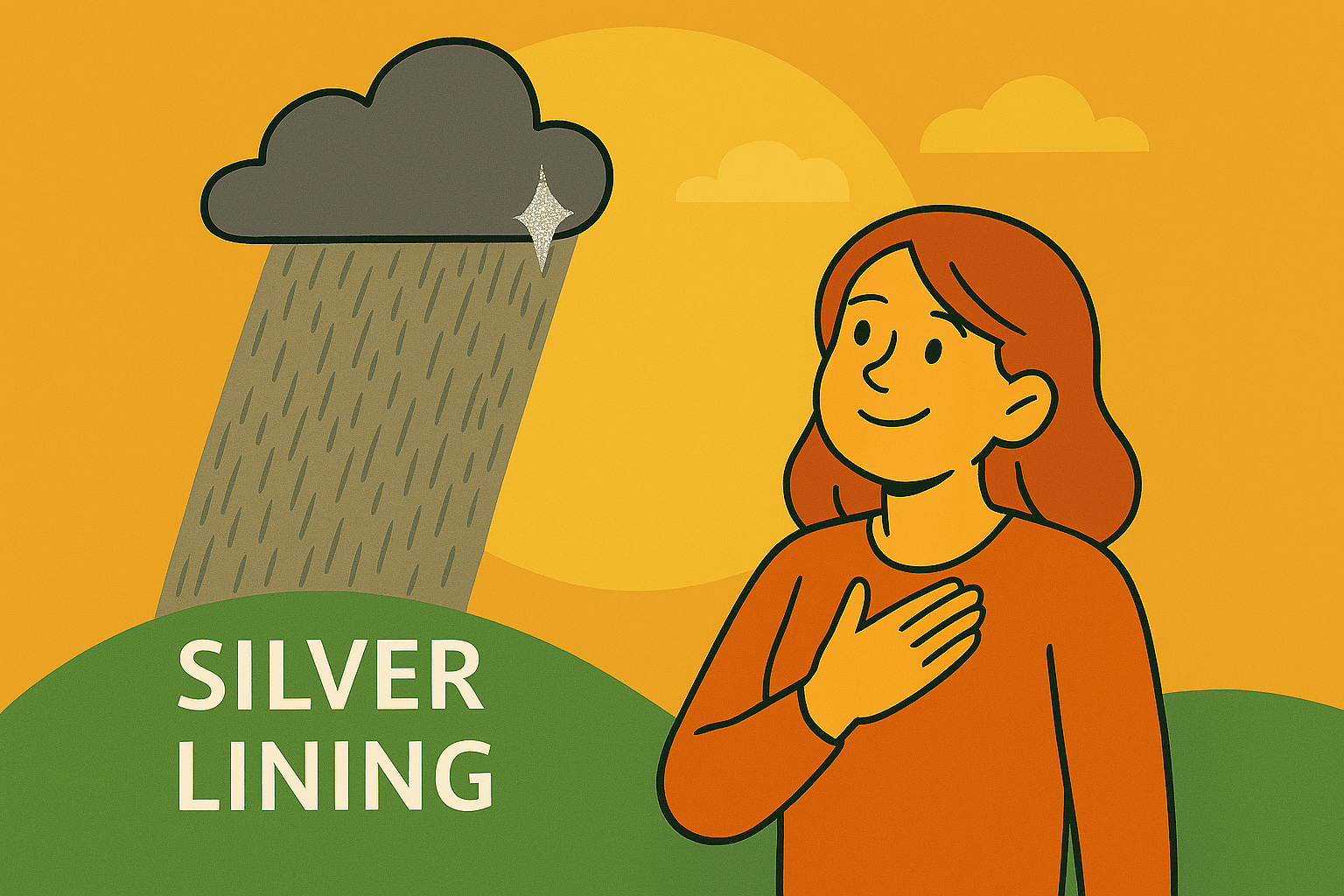
When life gets stressful — exams, homesickness, job searching, or Vancouver’s endless rain — English speakers often use the phrase: ✨ Silver lining ✨
What does it mean?
A silver lining is the positive part of a difficult situation.
It’s the small piece of hope, benefit, or lesson you discover even when things feel challenging.
The phrase comes from the idea that dark storm clouds often have a glowing silver edge — a reminder that even hard moments can contain something good.
☀️ Why This Expression Matters
Moving to a new country brings:
cultural adjustments
language challenges
financial stress
academic pressure
moments of loneliness
Using and understanding “silver lining” helps you stay hopeful and express emotions naturally in English.
It’s also a beautiful phrase to use when supporting friends or reflecting on personal growth.
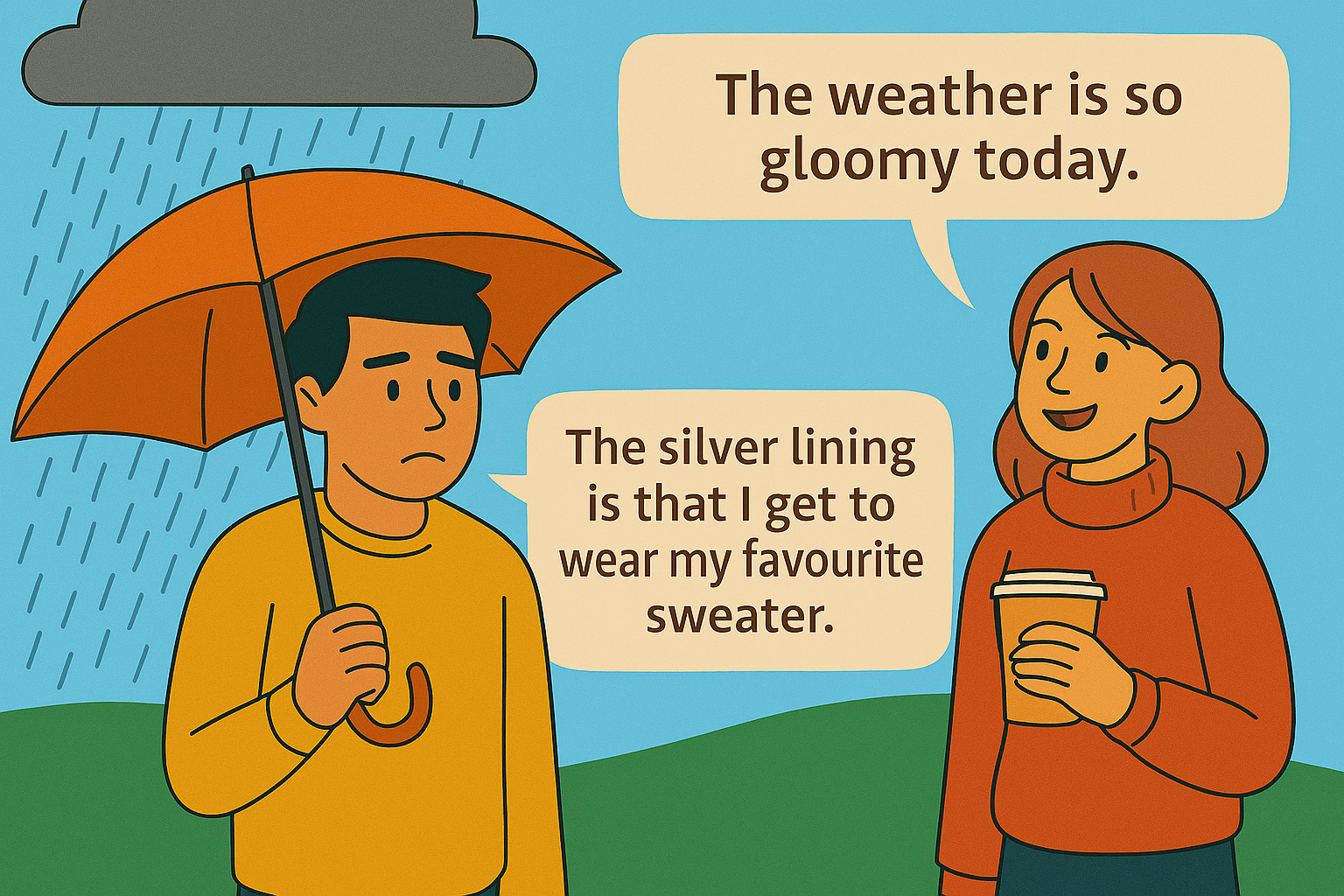
💬 How to Use “Silver Lining” in Real Life
Here are natural, everyday examples you can confidently use:
✔ When something goes wrong
“I missed the bus this morning, but the silver lining is that I discovered a new café I love.”
✔ In school or work
“My presentation was stressful, but the silver lining was receiving helpful feedback.”
✔ With friends
“It’s hard being away from home, but the silver lining is that I’m becoming more independent.”
✔ In personal reflection
“The rain can be annoying, but the silver lining is that Vancouver always looks fresh and green.”
🌱 Practice Activity for Today
Try using the phrase once today. You can:
Write it in your journal:
“The silver lining of my day was…”Say it to a friend:
“What silver lining did you find in that situation?”Use it in class or conversation:
“A silver lining of studying English is meeting new people.”
Small, everyday practice grows your confidence.
🌈 A Simple Tip
Whenever something feels disappointing or difficult, pause and ask yourself:
“What is the silver lining here?”
This question builds both your English skills and your resilience.