
Language of the Day: Corporate English
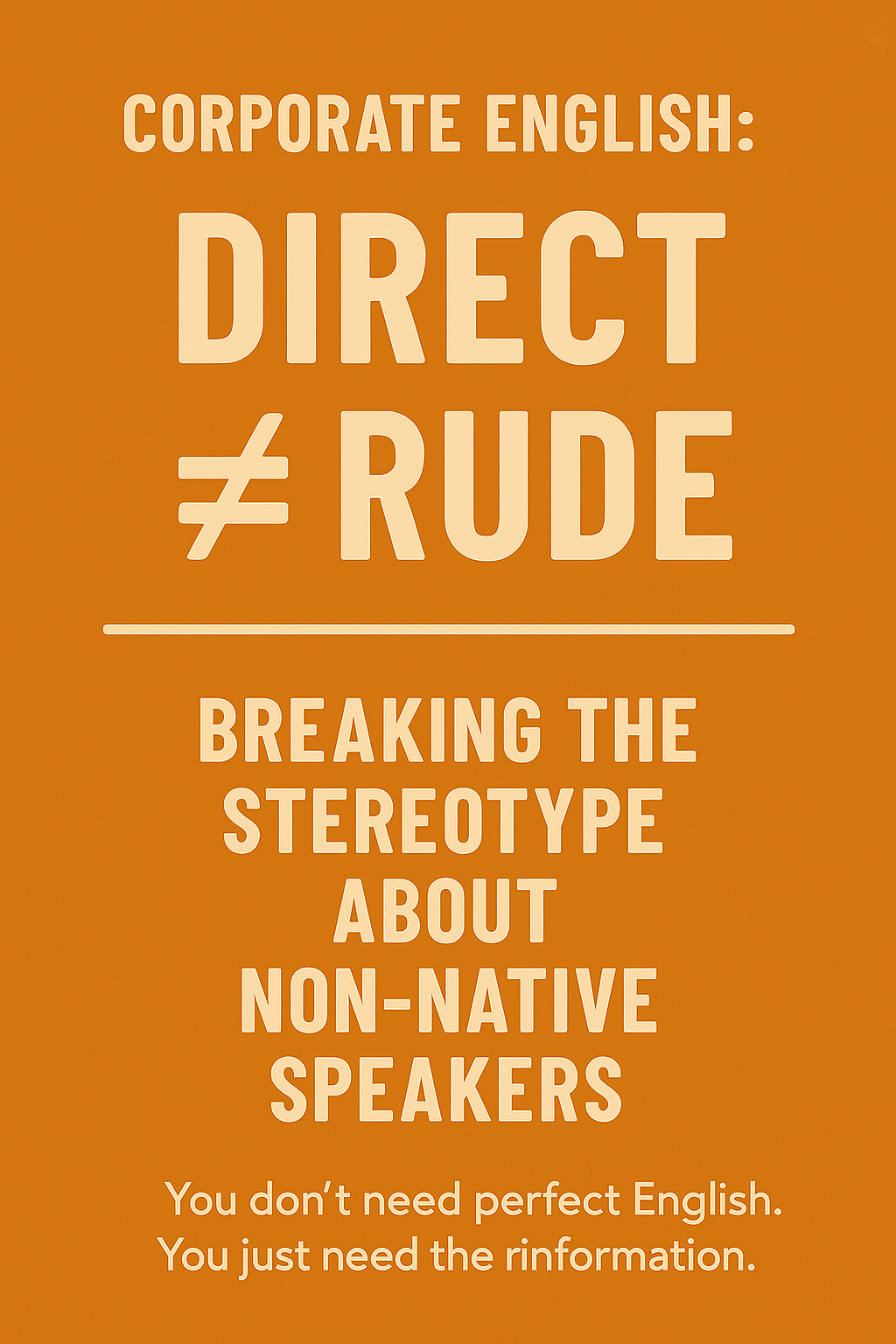
Why Direct English Is Not Rude — And Other Myths About Non‑Native Speakers
Have you ever worried that your English sounds too direct at work?
Maybe you sent an email and later thought:
“Was that rude?”
“Did I forget a polite word?”
“Do they think I’m unfriendly?”
If you’re a non‑native English speaker, you’re not imagining this feeling.
Many people experience it every day in Canadian workplaces.
But here’s the truth:
👉 Being direct in English does not mean being impolite.
👉 Having fewer “soft” words does not mean having bad intentions.
Let’s talk about a common stereotype—and why it’s not true.
The Stereotype: “Non‑Native Speakers Sound Rude”
There is a quiet assumption in many workplaces:
Native speakers = polite
Non‑native speakers = blunt or harsh
But what people often hear as “rudeness” is simply efficient, clear communication.
For example:
“Please send the report by Friday.”
Some listeners expect something like:
“Hi! I hope you’re doing well 😊
When you have a moment, would it be possible to send the report by Friday?
Thanks so much!”
Both messages mean the same thing.
One is longer.
One is shorter.
Neither one is rude.
Intent vs. Language Style
Politeness is not only about words.
It’s about intent.
Most non‑native speakers are not trying to be rude. In fact:
They often choose safe, simple sentences
They focus on clarity, not decoration
They avoid extra phrases because they’re unsure how they sound
This is not a lack of respect.
This is language confidence still growing.
Why English Sounds “Polite” (But Isn’t Always Clear)
Native speakers often use:
Softeners (“just,” “maybe,” “a bit”)
Vague phrases (“when you have time”)
Indirect language (“It might be helpful if…”)
This is a style, not a rule.
Corporate English can be:
Direct and respectful
Short and professional
Clear and kind
Being efficient is not impolite.
It’s often appreciated.
A Hidden Double Standard
Here’s something we don’t talk about enough:
When native speakers are direct → they are “confident”
When non‑native speakers are direct → they are “rude”
This double standard is unfair—and harmful.
Non‑native speakers already:
Translate in their heads
Worry about grammar
Monitor their tone constantly
Adding “You need to sound nicer” on top of that creates stress—not better communication.
What Real Workplace Politeness Looks Like
Real politeness at work is:
Meeting deadlines
Listening respectfully
Being reliable
Being honest and clear
Not:
Long emails
Apologies for everything
Extra soft language in every sentence
Sometimes the most respectful thing you can do is be clear.
For Non‑Native English Speakers: A Reminder
You do not need to:
Sound like a native speaker
Add emojis or extra lines
Apologize for clear requests
You are allowed to:
Be direct
Be professional
Be yourself in your English
Your message matters more than the number of polite fillers.
For Listeners and Teams: A Small Shift
If you work with non‑native speakers, try this mindset shift:
Instead of asking:
“Does that sound polite?”
Ask:
“What is this person trying to communicate?”
Most of the time:
The message is respectful
The intention is good
The English is doing its job
Final Thought
Corporate English is not about sounding fancy or soft all the time.
It’s about:
Respect
Clarity
Trust
Breaking stereotypes starts with listening beyond the accent, beyond the sentence structure, and beyond expectations.
Direct English is not rude.
Sometimes, it’s simply honest, efficient, and human.