
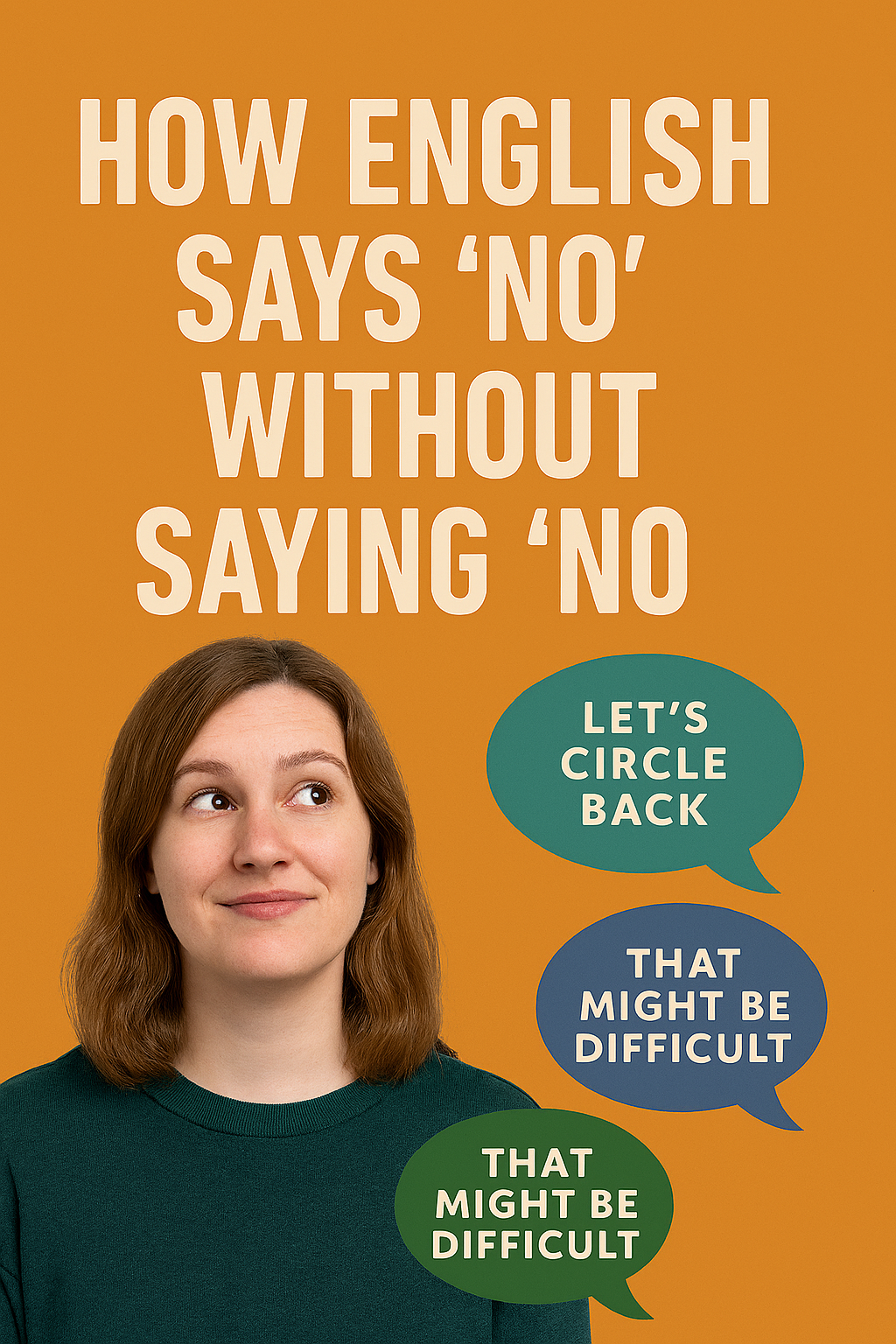
Language of the Day: How English Says “No” Without Saying “No”
Have you ever said “Sure!”
…while quietly screaming no inside?
Or maybe you heard someone say:
“I’ll think about it.”
And days later… nothing happened.
If this sounds familiar, welcome to one of the most confusing (and fascinating) parts of English:
👉 Polite English “no.”
Does English Hate the Word “No”?
Not exactly—but English avoids it.
In many English‑speaking cultures, especially in workplaces and professional settings, people often say “no” indirectly to sound polite, friendly, or non‑confrontational.
That means:
The words sound nice
But the meaning is… not yes
If you’ve ever been confused, you’re not alone.
Let’s decode some of the most common ones.

1. “I’ll Think About It”
Sounds like:
“I’m open to the idea.”
Often means:
“No, but I don’t want to hurt your feelings.”
Example:
“That’s an interesting idea. I’ll think about it.”
Translation:
I have already decided.
💡 Tip:
If there’s no follow‑up time mentioned (“I’ll let you know by tomorrow”), don’t expect a yes.
2. “That Might Be Difficult”
Sounds like:
“There’s a small problem.”
Actually means:
“This is not going to happen.”
Example:
“Changing the deadline might be difficult.”
Translation:
Please don’t ask again.
😄
English loves the word “might” when it wants to avoid conflict.
3. “Let’s Circle Back”

Sounds like:
“We’ll talk later.”
Often means:
“Not now… and maybe not ever.”
Example:
“Let’s circle back to this next week.”
Translation:
This is going into the invisible folder.
🌀
Some learners joke that “circle back” is English for walking in circles.
4. “I’ll Get Back to You”
Sounds like:
“I’m busy, but I care.”
Could mean:
Maybe
Probably not
Or yes… much later
Example:
“I’ll get back to you on that.”
💡 Tip:
If it’s important, it’s okay to politely follow up:
“Just checking in—I wanted to see if you had a chance to think about it.”

5. “That’s Interesting”
⚠️ This one is tricky.
Sometimes means:
“Wow! Tell me more.”
Sometimes means:
“I don’t agree, but I’m being polite.”
How to tell the difference?
Tone
Facial expression
What comes next
If they change the topic immediately… it’s probably a soft no.
Why Does English Do This?
Good question.
In English, especially Canadian and workplace English:
Politeness = professionalism
Direct “no” can feel uncomfortable
Saving relationships matters
So instead of saying “no,” English speakers wrap it in:
soft words
gentle phrases
friendly smiles
Confusing? Yes.
Normal? Also yes.
What Should You Do?
Here’s the good news:
✅ You don’t have to guess perfectly every time.
Try this instead:
Listen to the pattern, not one word
Notice if there’s action, not just language
It’s okay to ask politely for clarity
Example:
“Just to confirm—should I move forward with this, or pause for now?”
That’s clear and polite.
Final Thought
Learning English isn’t just about vocabulary—it’s about reading between the lines.
If you’ve ever misunderstood a polite “no,” that doesn’t mean your English is bad.
It means: 👉 You’re learning how English really works.
So next time someone says,
“I’ll think about it,”
You’ll know exactly what to think too. 😉