
Language of the Day: Paraphrasing
Language of the Day: Paraphrasing
Paraphrasing is one of the most important skills for language learners.
Whether you're preparing for exams, improving your communication at work, or trying to sound more natural in daily conversation, paraphrasing helps you express the same idea in different ways, clearly and confidently.
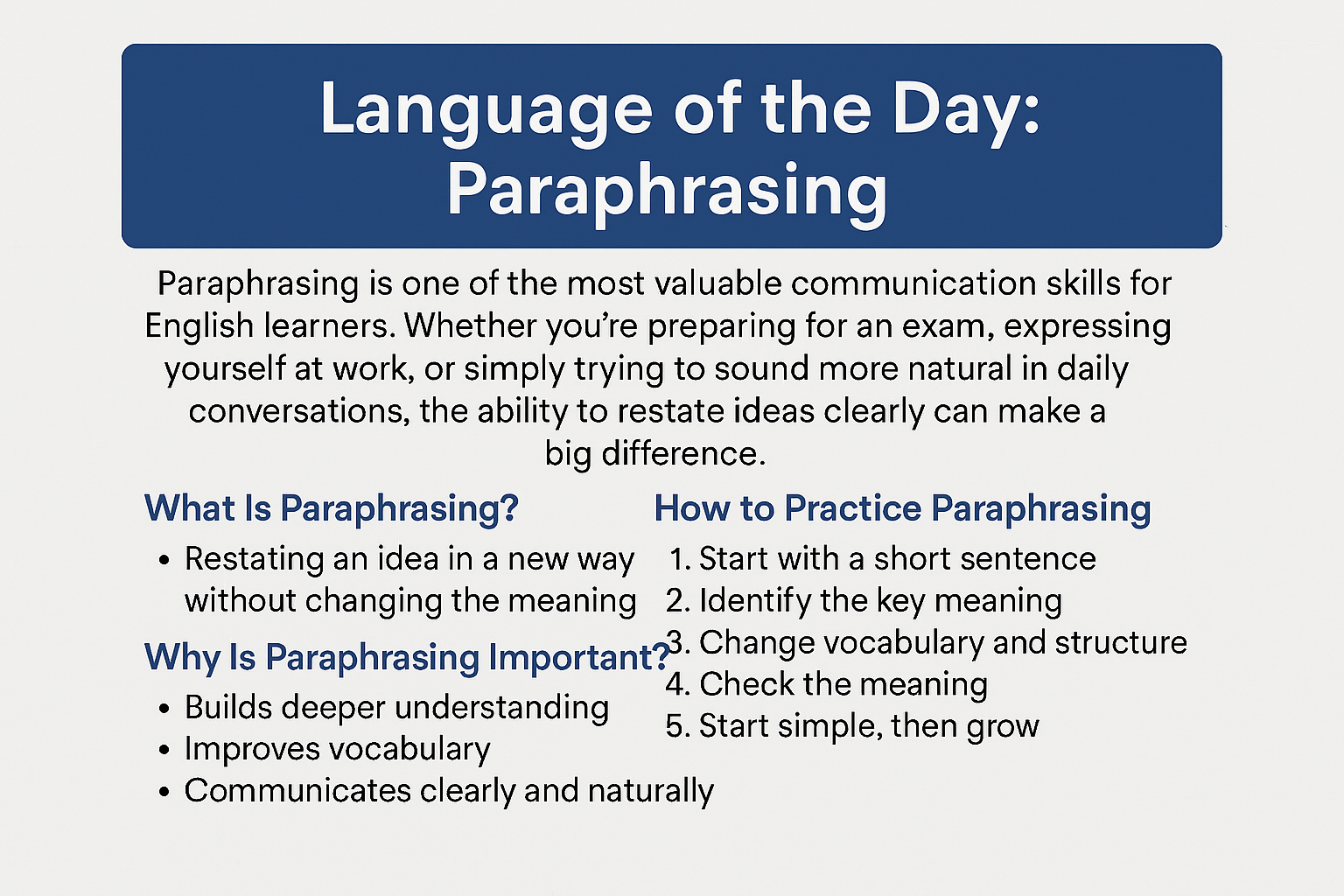
What Is Paraphrasing?
Paraphrasing means restating a sentence or idea using different words, structures, or expressions without changing the meaning.
It’s not just about replacing words, it’s about truly understanding the message and expressing it in your own way.
Why Is Paraphrasing Useful?
Paraphrasing can help you:
Strengthen your understanding
When you paraphrase, you show that you really understand the idea.Improve your vocabulary
You learn multiple ways to express the same meaning.Sound more natural
Native speakers rarely repeat the exact same sentence — they rephrase.Prepare for tests
Exams like IELTS or CELPIP often require paraphrasing in speaking and writing.Communicate more clearly
If someone doesn’t understand you, paraphrasing lets you explain again in a simpler way.
How to Practice Paraphrasing (Simple Steps)
1. Start with a short sentence
Example:
“The weather is getting warmer today.”
2. Identify the key meaning
→ Today, the temperature is rising.
3. Change vocabulary, structure, or both
It’s a bit warmer outside today.
The temperature is increasing this afternoon.
Today feels much warmer than yesterday.
4. Keep the meaning the same
If the meaning changes, it’s no longer a paraphrase.
5. Try different difficulties
Start simple, then try more complex sentences as you grow confident.
Example Paraphrasing Practice
Original:
“I don’t understand this sentence.”
Paraphrases:
This sentence is confusing to me.
I’m having trouble understanding this sentence.
I’m not sure what this sentence means.
Original:
“I need more time to finish the task.”
Paraphrases:
I require extra time to complete the task.
I need a bit longer to get this done.
I’m not finished yet, I need more time.
Challenge Yourself
Try paraphrasing these sentences:
“The bus was very crowded this morning.”
“I enjoy learning English with my classmates.”
“Can you help me with this form?”
(If you want, I can check your answers!, Come to MOSAIC engage to ask more questions)
Tips for Successful Paraphrasing
Don’t paraphrase word-by-word — focus on the whole meaning.
Use synonyms carefully — choose natural, common alternatives.
Practice daily — even paraphrasing one sentence a day helps.
Listen to how native speakers rephrase in podcasts, videos, and conversations.
Be flexible — there is always more than one correct paraphrase.