
Language of the Day: "-Head"
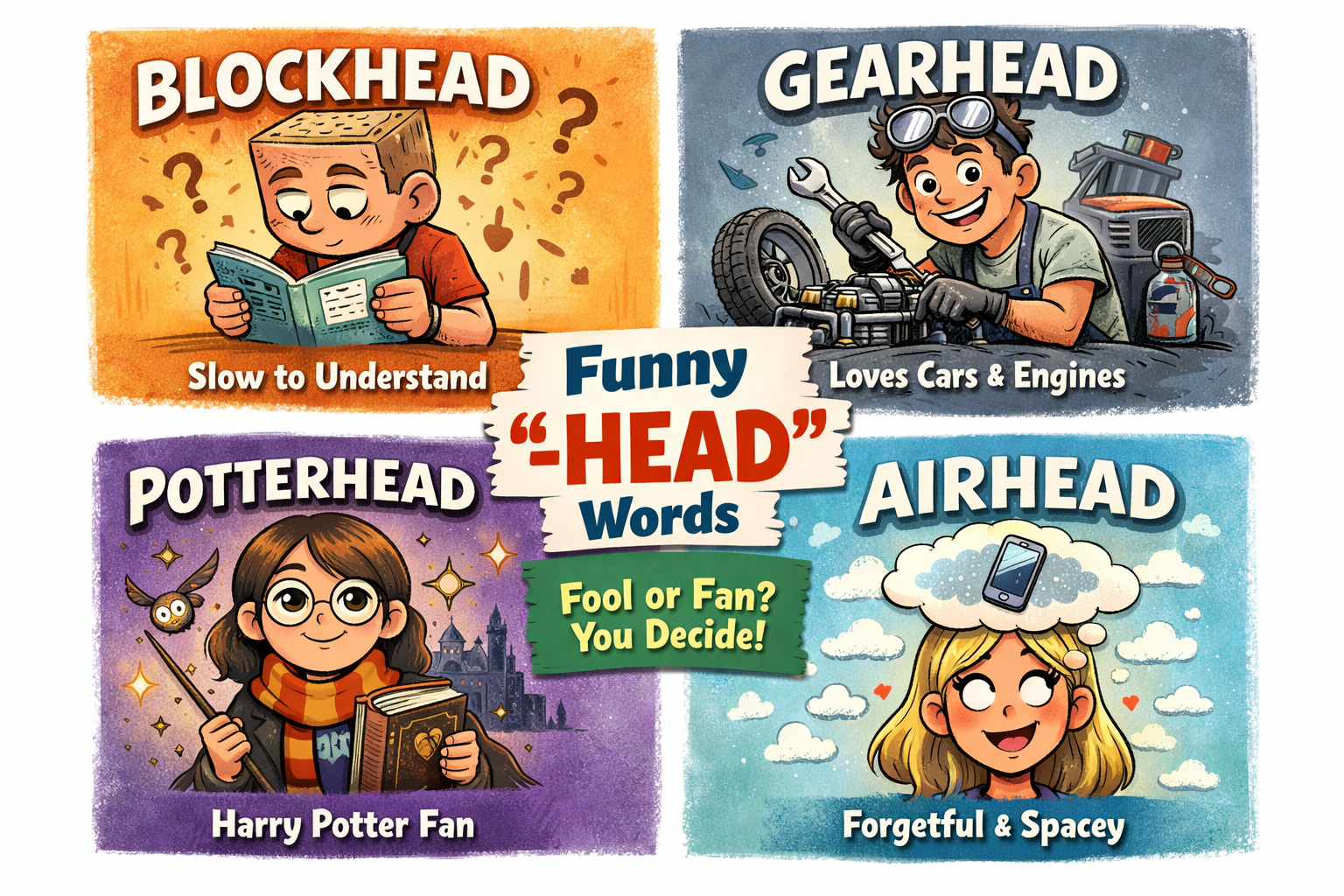
Funny “-Head” Words in English: Meanings, Examples, and Humor
English has a playful tradition of forming humorous words by adding the suffix “-head” to another word. These expressions are usually informal and often describe someone’s personality, behavior, or way of thinking.
Many “-head” words are teasing insults, but the suffix doesn’t always have a negative meaning. Sometimes it simply refers to a person who strongly likes, knows about, or is obsessed with something.
What Does “-Head” Mean in English?
The suffix “-head” can have two main meanings.
1. A Person Who Is Foolish or Slow-Thinking
In many slang expressions, “-head” humorously suggests that something is wrong with a person’s thinking.
Examples:
Bonehead → someone who does something stupid
Blockhead → someone slow to understand
Airhead → someone absent-minded or not very thoughtful
These words often appear in movies, casual conversations, or jokes.
2. A Person Who Loves or Is Passionate About Something (Positive Meaning)
“-Head” can also describe someone who is very enthusiastic about a hobby, activity, or interest.
Examples:
Gearhead → someone who loves cars and engines
Potterhead → a big fan of the Harry Potter series
Deadhead → a devoted fan of the band Grateful Dead
Metalhead → someone who loves heavy metal music
In this sense, “-head” simply means “a devoted fan or enthusiast.”
Example sentence:
“My brother is a real gearhead—he spends every weekend working on his car.”
When “-Head” Means Someone Is Being Silly
Blockhead
A person who is very slow to understand something.
Example:
“Don’t be a blockhead—read the instructions first!”
Joke:
If thinking burned calories, a blockhead would still be on a zero-calorie diet.
Bonehead
Someone who makes an obvious or careless mistake.
Example:
“I left my keys in the car again. What a bonehead move.”
Joke:
A bonehead is the kind of person who clicks “remind me tomorrow”… every day.
Knucklehead
A foolish or goofy person, often used in a playful way.
Example:
“You knucklehead! You forgot the tickets.”
Joke:
A knucklehead’s life motto: “I’ll figure it out… eventually.”
Airhead
Someone who is distracted or forgetful.
Example:
“I put my phone in the fridge again. I’m such an airhead.”
Joke:
An airhead’s brain storage: 90% air, 10% random song lyrics.
Meathead
Someone who acts aggressive or insensitive, sometimes suggesting more muscle than thinking.
Example:
“Stop acting like a meathead and listen.”
Joke:
A meathead’s favorite exercise? Jumping to conclusions.
Dunderhead
An old-fashioned word for a very foolish person.
Example:
“You dunderhead! That was the wrong button.”
Joke:
Calling someone a dunderhead sounds polite—but the insult is still doing its job.
When “-Head” Means a Passionate Fan
In modern English, “-head” can also describe someone who loves something deeply.
Gearhead
A person who loves cars and engines.
Example:
“My brother is a real gearhead—he spends weekends fixing cars.”
Joke:
A gearhead can identify an engine sound faster than they recognize their own ringtone.
Potterhead
A devoted fan of the Harry Potter universe.
Example:
“She’s a huge Potterhead and has read the series five times.”
Joke:
A Potterhead’s biggest fear: getting a letter… and it’s just a bill, not Hogwarts.
Metalhead
Someone who loves heavy metal music, especially bands like Metallica.
Example:
“He’s a metalhead who goes to every rock concert.”
Joke:
A metalhead’s relaxing music… is still louder than most people’s alarm clocks.
Deadhead
A devoted fan of the band Grateful Dead.
Example:
“Deadheads often travel across cities to attend concerts.”
Joke:
A Deadhead’s travel plan: “Wherever the tour bus goes.”
Cheesehead
Fans of the Green Bay Packers proudly call themselves Cheeseheads and even wear foam cheese hats.
Joke:
A Cheesehead never worries about fashion—cheese hats go with everything.
Why English Uses “Head” This Way
In English, the head symbolizes thinking and identity. When combined with another word, “-head” humorously describes what fills someone’s head.
For example:
Airhead → a head full of air
Blockhead → a head like a block (slow thinking)
Gearhead → a head full of engines and machines
English speakers also enjoy inventing new “-head” words, especially in fan communities.
Final Thoughts
The suffix “-head” is a great example of how creative and playful English vocabulary can be. With just one small ending, speakers can describe someone who is being silly, slow to understand, or passionate about a hobby or fandom.
Sometimes “-head” words are lighthearted insults like bonehead or knucklehead. Other times, they are proud fan labels like gearhead or Potterhead. The meaning usually depends on context, tone, and who is saying it.
For English learners, recognizing patterns like “-head” can make vocabulary easier to understand—and more fun to learn. Once you know the pattern, you’ll start noticing these playful words everywhere in movies, books, and everyday conversations.
And who knows? You might even discover which “-head” you are—a bookhead, a music head, or maybe just a coffee head trying to survive Monday mornings. ☕😄