
Language of the Day: Jargon
If you’ve ever heard someone say “Let’s circle back after the KPI review” or “The patient is presenting with acute symptoms,” you’ve encountered jargon.
Jargon is everywhere—in business meetings, hospitals, technology discussions, and even classrooms. While it can make communication faster among experts, it can also confuse people who are unfamiliar with the terms.
Let’s explore what jargon is, why people use it, and some examples from different industries.
What Is Jargon?
Jargon refers to specialized words or expressions used by a particular profession, group, or industry. These terms often have specific meanings that may not be easily understood by outsiders.
Jargon exists because professionals need quick, precise ways to communicate complex ideas. However, when used with people outside the field, jargon can make communication unclear.

Example:
Business jargon: “We need to leverage our synergy to maximize ROI.”
Plain English: “We should work together to increase profits.”
Why Do People Use Jargon?
There are several reasons jargon exists:
1. Efficiency
Specialized terms can communicate complex ideas quickly.
2. Precision
Some concepts require exact terminology that ordinary language cannot easily replace.
3. Professional Identity
Using industry language helps professionals signal expertise and membership in a field.
4. Habit
People often use jargon automatically when speaking with colleagues.
Examples of Jargon in Different Industries
Business Jargon
Corporate workplaces are famous for jargon.
Examples include:
KPI (Key Performance Indicator) – A measurable value that shows performance.
Circle back – Discuss something again later.
Bandwidth – Available time or capacity.
Low-hanging fruit – Tasks that are easy to accomplish.
Example sentence:
“We’ll circle back on the KPI report once the team has more bandwidth.”
Medical Jargon
Healthcare professionals use highly technical language to communicate precisely.
Examples include:
BP – Blood pressure
STAT – Immediately
Benign – Not harmful
Acute – Severe or sudden
Example sentence:
“The patient presents with acute abdominal pain and elevated BP.”
Technology Jargon
The tech world has developed its own vocabulary.
Examples include:
Bug – A software error
Patch – A fix or update
Bandwidth – Data transfer capacity
Cloud computing – Storing and accessing data over the internet
Example sentence:
“We deployed a patch to fix the security bug in the system.”
Legal Jargon
Legal language often sounds formal and complex.
Examples include:
Plaintiff – The person who brings a case to court
Defendant – The person accused in court
Litigation – The process of taking legal action
Affidavit – A written statement confirmed by oath
Example sentence:
“The plaintiff submitted an affidavit as evidence in the litigation.”
When Jargon Becomes a Problem
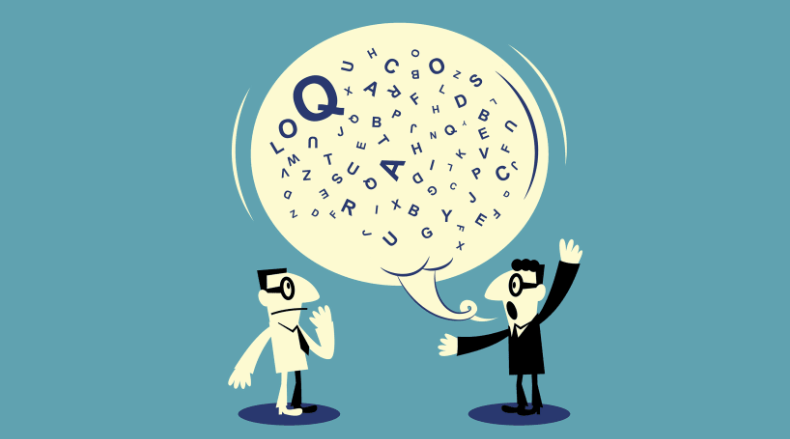
Jargon can cause problems when it is used with people who are not familiar with the terms.
For example:
❌ “We need to optimize cross-platform synergy.”
✔ “We need our teams to collaborate better across departments.”
Clear communication is usually more effective than complicated language.
How to Use Jargon Effectively
If you work in a specialized field, here are some simple tips:
Know your audience – Avoid jargon when speaking with non-experts.
Explain terms when needed – Especially in presentations or writing.
Keep communication simple – Clarity is always better than complexity.
Final Thoughts
Jargon is a natural part of professional communication. It helps experts speak efficiently and precisely within their fields. However, when communicating with broader audiences, simplifying language can make your message much clearer.
Understanding jargon not only improves communication but also helps you better understand different industries and professional cultures.